
Over the past year, this series has circled a single question from many directions. We have looked at the metamorphosis of authority, the generation asking to be led, who answers for the machine, the classroom that learns you back, hiring by algorithm, protected attention, the trust dividend, the agent on the payroll, how to resource capability, learning in the flow, and governing what you didn’t build. Underneath every one of them sat the same quiet worry: if machines can do so much of what leaders used to do, what exactly is the leader for?
This final essay is the answer the others were building toward. It is not that leadership shrinks as the machines grow. It is that leadership changes shape — away from the parts a model can now do better, and toward the parts only a human can do at all. The leader stops being the smartest processor in the room, because they are no longer the smartest processor in the room. They become something the machine cannot be: the source of direction, judgement and meaning for a collective that is now part human and part machine.
Call that role the orchestrator. It is the leadership job of the next decade, and it is both humbler and harder than the one it replaces.
As the machine takes the technical load, leadership moves to what only a human can do: set direction, exercise judgement, and make meaning for a human–machine collective.
What follows: why the old model breaks, what the orchestrator actually does, the human core no machine can take, the new operating model, and five moves to lead it.
Command-and-control was built for scarcity
The model of leadership most of us inherited was forged in an age of information scarcity. The leader sat at the top because they could see most, know most and decide best; authority flowed from expertise, and the organisation’s job was to execute the centre’s decisions reliably. Command set the direction; control made sure it happened. For a century, in a world where knowledge was expensive and slow to move, that arrangement made sense.
Two forces have quietly dismantled its foundations. First, information stopped being scarce — it became infinite, instant and, increasingly, processed for you by a machine that can out-read, out-recall and out-calculate any human in the room. The leader is no longer the best-informed node; pretending otherwise is now a liability. Second, the workforce changed: a generation that, as we saw early in this series, will give its best to meaning and growth but not to mere instruction. Command-and-control answers a question the world has stopped asking.
Command-and-control answers a question the world has stopped asking.
From commander to conductor
If the leader is no longer the smartest processor, what are they? The most useful metaphor is the conductor of an orchestra. A conductor plays no instrument during the performance and is, in the narrow sense, the least “productive” person on the stage. Yet without them the players — each more skilled on their instrument than the conductor — produce noise, not music. The conductor’s work is not to out-play anyone. It is to set the interpretation, hold the tempo, bring each voice in at the right moment, and make a hundred separate excellences into one coherent thing.
That is the shape of leadership in a human–machine collective. The orchestrator composes the whole: deciding which work goes to people and which to machines, pointing scarce human attention at what matters, holding the standard of judgement, and — above all — supplying the meaning that tells everyone why any of it is worth doing. It is a move from knowing and deciding, through planning and overseeing, to composing and meaning. Less visible, more decisive.
What no machine can take
Here is the reassurance hidden in the disruption. The skills data points the same way the philosophy does. The WEF’s outlook to 2030 has technical capabilities — AI and data chief among them — as the fastest-growing skills; but climbing right alongside them, and rising precisely because the technical load is being automated, are the distinctly human ones: leadership and social influence, creative thinking, resilience, curiosity. As the machine takes the calculable, the premium shifts to the things it cannot do.
And those things are exactly what this series has been mapping. The judgement to decide what is worth doing, not just how to do it. The trust that lets a collective move fast and tell the truth. The attention to think deeply in a world of infinite intake. The accountability a name must carry when a machine acts. The meaning that turns a group of people and tools into a team with a purpose. A model can generate; it cannot care, commit, or be answerable. That residue — what is left when everything computable has been automated away — is the leader’s permanent domain.
How orchestration actually works
None of this is soft or abstract; it resolves into a different way of running the day. The orchestrator spends less time directing tasks and more time designing the system that does them — choosing the human–machine mix, setting the standards of judgement, and removing what fragments focus. They measure outcomes and meaning rather than activity and hours. They treat their own attention, and their people’s, as the scarce resource it is. And they hold the moral centre: the place where someone decides what the organisation will and won’t do, whatever the tools make possible.
The contrast with the old model is stark, and worth making explicit — because most organisations still run the legacy operating system even as the hardware around them has completely changed.
Five moves of the orchestrator
The whole series distils, in the end, to five things the 2030 leader actually does. This is the operating model.
Compose the mix
Decide, deliberately, what is done by people, what by machines, and where the two meet — protecting the judgement, trust and relationships that must stay human. The mix is now a leadership decision, not an IT one.
Direct the attention
In a world of infinite intake, point scarce human focus at what truly matters and defend it from the noise. What the orchestrator chooses not to attend to is as decisive as what they do.
Hold the judgement and the accountability
Be the named human who owns the consequential calls — what the machine may decide, where it must escalate, and who answers when it errs. Responsibility does not transfer to software.
Build trust and growth
Run the culture as the asset it is: treat people in a way that earns candour, and make the place one where they visibly grow. This is what keeps a human–machine collective both honest and loyal.
Make the meaning
Supply the answer no model can generate: why this work matters. Meaning is the one thing a machine cannot manufacture and a leader cannot delegate — and in an automated world it becomes the whole of the job.
The machines will keep getting better at the things machines are good at. That is precisely why the leaders who matter will be the ones who get better at the things only humans can do — composing, attending, judging, trusting, and meaning. The orchestra is changing. The need for someone to conduct it is not.
Stop trying to out-compute the machine. Do the human work it cannot: give the collective its judgement, its trust, and its meaning.
- World Economic Forum — Future of Jobs Report 2025 (skills outlook): AI & big data the fastest-growing skill to 2030, with leadership & social influence, creative thinking, resilience and curiosity among the top rising human skills; net +78m roles by 2030.
- Leadership Futures — this essay is the capstone of the twelve-part series (Essays 01–11), and synthesises their arguments on authority, generations, accountability, learning, hiring, attention, trust, agentic AI, resourcing and governance.
- Note: the “commander → manager → orchestrator” model and the five-move operating model are the author’s framework; the empirical claims above are drawn from the cited WEF source and the sources referenced in the earlier essays.
- The conductor/orchestra analogy is a long-standing metaphor in leadership writing, used here to frame the human–machine collective.
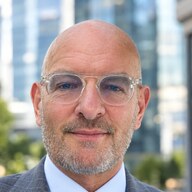
Dr. Andy Collyer
Non-Executive Director, author and keynote speaker. EQ-first leadership, governance and AI. Doctor of Leadership & Management; former National Leader of Governance.